
Wednesday, November 25, 2026 | Today's Newsletter | Login
Tories Challenge Canada’s New Immigration Plan
By Mata Press Service
Canada's Conservatives are calling on Parliament to reject the federal government's latest immigration plan, warning that allowing up to 662,000 people to become permanent residents next year would put more pressure on jobs, housing and health care.
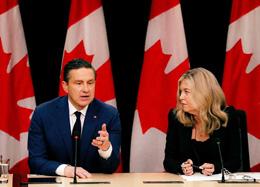
Conservative immigration critic Michelle Rempel Garner said the party will introduce a motion in the House of Commons, urging MPs to oppose the additional permanent residency approvals proposed by Prime Minister Mark Carney's government.
"We would love to see the Liberal backbench vote in favour of this motion. We need to take a pause. We need to bring down immigration levels and address these serious social infrastructure deficits so that everybody can succeed," Rempel Garner told a news conference.
The political showdown comes as a new RBC Economics report warns that Ottawa is already falling behind on its plans to reduce immigration, with far fewer temporary residents leaving Canada or becoming permanent residents than expected.
The report found that the planned reduction in temporary residents fell short by roughly half in 2025, with a similar shortfall expected this year.
That raises doubts about whether Ottawa can meet its goal of bringing temporary residents down to less than five per cent of Canada's population by the end of 2027.
RBC economist Rachel Battaglia says the target is unlikely to be reached, even as the government creates new opportunities for temporary residents to stay permanently.
At the centre of the dispute is the difference between Ottawa's official immigration target and the number of people who could actually receive permanent residency.
The government's latest plan sets a target of 380,000 new permanent residents annually from 2027 to 2029. It also allows for 370,000 new temporary resident arrivals each year, including international students and foreign workers.
But special programs could push the number of permanent residency approvals much higher.
The government plans to grant permanent residency to up to 200,000 additional people already living in Canada next year.
Half of those places are intended for workers and their families, selected with provincial input to meet labour shortages.
The other half would go to people with long-standing humanitarian applications, including about 50,000 Ukrainians and former Hong Kong residents already living in Canada under special programs.
Another 82,000 people could receive permanent residency next year through earlier programs for protected persons and temporary workers.
Add those numbers to the regular target of 380,000, and Canada could approve as many as 662,000 permanent residents in 2027.
That would be 74 per cent above the official target and the highest annual total in Canadian history.
RBC cautions that 662,000 is a potential maximum, not a prediction of how many people will actually receive permanent residency.
Rempel Garner argues that people from Ukraine and Hong Kong could be accommodated within existing immigration targets without increasing the overall number.
Immigration Minister Lena Diab has defended the special programs, saying most of those eligible are already living in Canada and would therefore place no immediate additional pressure on housing or public services.
The government says the measures will help employers keep needed workers while clearing long-standing immigration applications.
Canada began tightening immigration rules in 2024 after rapid population growth added to concerns about housing affordability and pressure on public services.
The plan relied heavily on reducing the number of temporary residents, including international students, foreign workers and asylum claimants.
Many were expected to leave when their permits expired. Others would qualify to become permanent residents.
But that process is moving much more slowly than expected.
According to RBC, the planned reduction in temporary residents through departures and changes to permanent residency status missed its target by roughly half in 2025.
A similar shortfall is expected in 2026.
As of July 1, 2026, Canada had approximately 2.8 million temporary residents, representing about 6.7 per cent of the population.
RBC expects that share could fall below six per cent next year but considers Ottawa's five per cent target increasingly unlikely.
Parisa Mahboubi of the C.D. Howe Institute estimates that meeting the target would require reducing the temporary resident population by about 700,000 people in just 18 months.
The government's new immigration programs could make that challenge more complicated.
Roughly 200,000 temporary residents already become permanent residents each year, according to RBC.
Additional pathways could allow more people who might otherwise have left Canada to remain permanently.
The programs could also make room under regular immigration targets for more newcomers arriving from overseas.
RBC notes that more than half of recent permanent resident admissions involved people arriving from outside Canada.
Another concern is whether Ottawa's immigration reductions will ease pressure on housing and public services as much as promised.
When a temporary worker or international student becomes a permanent resident, that person is removed from the temporary resident count.
But they continue living in Canada, often in the same home and community.
That means Ottawa can report a decline in temporary residents even when many of those people have simply changed their immigration status.
RBC warns that if more temporary residents are allowed to stay instead of leaving, Canada's population could remain higher than previously expected.
Mahboubi has also questioned whether the growing number of special immigration programs is making government targets harder to understand.
While Ottawa continues to announce annual permanent residency targets of 380,000, additional programs outside those targets could substantially increase the actual number of approvals.
She has called for clearer reporting on how many people are entering, leaving and remaining in Canada.
Leave a comment