
Wednesday, November 11, 2026 | Today's Newsletter | Login
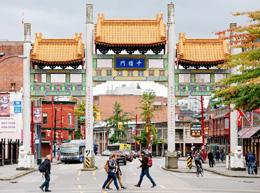
Canada’s Fading Chinatowns Threaten Culinary Heritage
By Jonah Jung
Local Journalism Initiative Reporter
As Canada’s traditional Chinatowns shrink, the cooks who created the country’s Chinese foods are working to preserve their culinary heritage.
Earlier this year, the Toronto chapter of the North American Association of Asian Professionals (NAAAP) hosted an event to explore the evolution of Chinese cuisine in Canada. Panelists stressed the need to protect Chinese heritage, especially as many Chinatowns face decline.
National Trust of Canada, a Canadian charity for saving historic sites, said Chinatowns that bring history and culture together are at risk of sitting on expensive real estate, being targeted for land grabbing and facing commercial rents caused by gentrification.
“This has driven out legacy businesses, and led to higher housing costs that have displaced traditional communities,” said the charity.
“Many Chinatowns, not only in Canada, but around the world, are facing increasing pressures, with long-time businesses closing and historic neighbourhoods disappearing,” said Trevor Lui, chef and co-founder of Quell agency in Toronto.
Joyce Leung, founder of the Hamilton Chinese Association and a business owner, who offers Chinese cooking classes to teach people traditional recipes.One of her recipes was nominated in September to be included in a community-sourced cookbook published by the Ontario supermarket chain Food Basics.
The company asked people to nominate home chefs to be featured in a cookbook series titled More Flavours of Home that highlights recipes, traditions and the people behind the dishes served during Diwali, Lunar New Year and Ramadan celebrations.
Leung’s recipe is for a Lunar New Year dumpling. In Chinese culture, dumplings represent good wealth for the upcoming year.
“It is a simple Lunar New Year pan fry dumpling recipe with a pork filling,” she said. "It's very approachable and easy to make, especially if you've never made dumplings before.
“You make the dough from scratch, but it's laid out in a way anyone can do it.”
Leung said the recipe was passed down from her mother and she updated it for modern cooks. She submitted the recipe to share why Chinese people eat dumplings during new year celebrations.
“I just wanted to share with the community that in Lunar New Year, every dish represents something,” Leung said.
“Noodles are supposed to mean a long life because the noodle strands are really long. Dumpling is a really important one because in Chinese culture, everyone wants to be wealthy.
I think people can understand that the dumpling itself is supposed to look like a little golden pouch.”
Leung founded the Chinese association in Hamilton after learning that despite its strong population of residents with Chinese heritage, the city had no events for Chinese New Year. According to the 2021 Census, over 15,000 out of 182,115 visible minorities identify themselves as Chinese.
“It was kind of blowing my mind that there was no Lunar New Year celebration,” Leung said. “That got us to create an association and there are tons of events with the association now, including a yearly Lunar New Year event so that we can celebrate and continue to share our culture that way.”
Fete Chinoise, an online publication that promotes Chinese art, food and fashion wrote about the NAAAP event and the panelists’ talks.
One of the panelists, Eva Chin, a chef and co-founder of Toronto’s Yan Dining Room, said Chinese cuisine is often undervalued despite the craftsmanship, creativity and skill required to prepare it. She said western cultures associate Chinese food with affordability and large portions served in mom-and-pop restaurants, which makes it challenging to elevate the cuisine.
“Chinese food is evolving in North America based on the immigrants,” Chin said. “It's evolving in China for people who are learning about their own heritage in a different way.”
YOUJIA, Montreal-based company that sells sauces, cooking oils and spices made for home cooks made in the tradition of Sichuan, China.
Joyce Zhang, the company's business relationships manager, said YOUJIA's philosophy lies in helping second-generation immigrants cook the traditional dishes of their heritage without having to do all the work themselves.
"We don't believe that heritage should be a heavy chore,” she said.
"Because in a way, our perspective is that tradition doesn't really mean that you must never change," said Zhang. "It's something that allows us to know where we come from, even as we evolve."
10 of North America’s
most historic Chinatowns
San Francisco Chinatown , California
Established in the 1840s and widely recognized as North America's oldest surviving Chinatown. Famous for Cantonese restaurants, bakeries, herbal shops and historic architecture.
Manhattan Chinatown , New York
Established in the 19th century. One of the continent's most important Chinese cultural and culinary centres, known for dim sum, roast meats, traditional markets and regional cuisines.
Vancouver Chinatown , British Columbia
Dating to the 1880s, Canada's largest historic Chinatown, with important heritage buildings, traditional businesses and Chinese community associations.
Toronto Chinatown , Ontario
Centred around Spadina Avenue and Dundas Street West. A major destination for Chinese restaurants, traditional markets and immigrant-owned businesses.
Victoria Chinatown , British Columbia
Canada's oldest surviving Chinatown, dating to the 1850s. Known for Fan Tan Alley, historic Chinese architecture and its connection to early Chinese migration.
Chicago Chinatown , Illinois
A prominent Chinese American community centred on Wentworth Avenue, with Chinese restaurants, family associations, shops and cultural institutions.
Montreal Chinatown , Quebec
Established in the late 19th century. Known for its traditional gates, restaurants and cultural institutions, with longstanding concerns about development pressure.
Boston Chinatown , Massachusetts
One of New England's most important Chinese cultural centres, with traditional restaurants, community organizations and a long history of immigrant settlement.
Los Angeles Chinatown , California
Its present-day district opened in 1938 after the original Chinatown was displaced. Known for its distinctive architecture, restaurants, traditional shops and arts scene.
Philadelphia Chinatown , Pennsylvania
Dating to the 1870s, an established Chinese American neighbourhood whose restaurants, grocery stores and community organizations have faced recurring redevelopment pressures.
Leave a comment