
Wednesday, October 28, 2026 | Today's Newsletter | Login
B.C.’s Economic Reset Needs to Start Now
By Mata Press Service
British Columbia has voted for change and delivered a clear political mandate. Now comes the harder task of turning that mandate into an economic recovery.
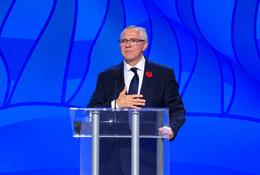
Premier-elect Lorne Doerkson and his new Conservative government inherit a province rich in natural resources, talent and economic opportunity, but increasingly burdened by rising costs, mounting debt, sluggish investment and a private sector struggling to create jobs.
For close to a decade, NDP governments have taken economic growth in B.C. for granted, expecting businesses to absorb higher taxes, rising regulatory costs and lengthy approval processes while continuing to invest, hire and compete.
That assumption reached its breaking point at the ballot box, where voters ended David Eby's government.
The economic record he leaves behind is troubling. B.C.'s economy is forecast to grow by just 0.9 per cent in 2026, well below its long-term average of 2.5 per cent.
Between January 2019 and August 2026, private-sector employment grew by only three per cent, while public-sector employment surged by 46 per cent.
Those numbers expose a fundamental weakness. Government spending and public-sector expansion cannot indefinitely compensate for a private economy that is losing momentum.
Doerkson's first priority should be restoring fiscal discipline.
With a projected operating deficit of $13.8 billion and annual debt-servicing costs expected to reach $8.7 billion by 2028-29, British Columbia is borrowing heavily against its future.
Every additional dollar spent servicing debt is money unavailable for hospitals, schools, public safety and infrastructure.
The new government needs a credible timetable to return to balanced budgets, backed by a comprehensive review of provincial spending. Programs should be judged by measurable results, with essential services protected and ineffective spending eliminated.
But balancing the books will require growing the economy that pays those bills.
That means making British Columbia competitive again.
The province's resource industries, particularly forestry, mining, natural gas and aquaculture, have enormous potential to generate investment, export earnings and well-paying jobs.
Yet too many projects remain stalled by regulatory uncertainty, overlapping approvals and unpredictable government decisions.
Doerkson has promised to accelerate mining approvals. That commitment should become the standard across the resource economy.
Clear permitting deadlines, coordinated reviews and transparent decision-making would give investors greater confidence while maintaining environmental safeguards.
The government should also confront the crisis in forestry, where more than 15,000 jobs have disappeared since 2022. Restoring dependable access to timber, accelerating approvals and expanding opportunities for processing could help struggling communities rebuild their economic foundations.
The same urgency should extend to coastal industries, including salmon farming, where federal policy threatens established businesses, jobs and investments.
Energy infrastructure must be another priority.
B.C. cannot attract major industrial projects without dependable and competitively priced electricity. New mines, manufacturing facilities and expanding communities require power infrastructure planned around future growth rather than expectations of continued industrial decline.
Tax competitiveness matters just as much.
Removing provincial sales tax from productivity-enhancing machinery, equipment and technology would encourage businesses to modernize and expand.
Housing affordability also demands attention. Municipal fees, development charges and approval delays increase construction costs and ultimately push home ownership further beyond the reach of working families.
The province should work with municipalities to reduce those burdens and accelerate housing construction.
Finally, British Columbia needs a government willing to measure its performance against economic results.
How many projects receive approval? How much private investment is committed? How many businesses expand? Are wages rising? Are families better off?
These should become the measures of success.
Doerkson has an opportunity to change the province's economic direction. But political goodwill will quickly evaporate if businesses continue to close, investments move elsewhere and households see little improvement in their finances.
British Columbia has everything it needs to prosper.
The new government's responsibility is to create the conditions that allow that prosperity to happen.
Leave a comment