
Wednesday, June 03, 2026 | Today's Newsletter | Login
Vancouver Chinese Revisit Their Roots
By Jonah Jung
Local Journalism Initiative Reporter
New Canadian Media
The Chinese community in Greater Vancouver is looking back at its immigration history coinciding with the Asian Heritage Month in May.
Marking the 5th anniversary of its opening, the Vancouver Chinatown Storytelling Centre, which tells how Chinese migrants came to British Columbia, opened the doors of the Learning Lab which showcased the history of Chinese immigration between the 1950s and 1980s.
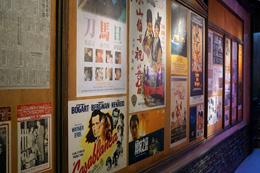
According to the Centre, the new lab offers a personal experience about Chinatown’s history, recreating a vivid streetscape with its restaurants, nightclubs, stores, newspapers, and community organizations.
For Lee Man, a long-time writer for the Vancouver Magazine and a judge for the Chinese Restaurant Awards, the opening of the Learning Lab on May 22 was a reminder that there's so much to celebrate for the Asian community during the Asian Heritage Month.
“There were obstacles that our parents went through, people who arrived to went through, but it isn't all a down story. It created real culture,” said Man who immigrated from Hong Kong at a young age.
As the centre opened its doors to the visitors, the Chinese community members explored through the streets of old Chinatown which was reconfigured in the 4000 sq. ft.space.
The guests took pictures of a cabinet full of historical mementos and stepped into recreated areas of Chinatown. There was also a digital display that featured significant objects in Chinese Canadian history.
One of the recreated stores was Green Door, a Chinese restaurant tucked into the streets of Chinatown, famous for its Chop Suey. Man said Green Door was the very first restaurant that his parents went to after arriving in Canada during cold Canadian winter.
“It is a place of remembering just how vital the Chinese community has always been and we should be proud of that,” Man said.
He said the Chinese community in Vancouver is uniquely integrated. “We have a Chinese mayor. We have Chinese people in government. Chinese people live all over Vancouver,” said Man.
He said the Chinese community should look back at the past with respect and honour and be in awe of what was created. “We should be so proud of ourselves,” said Man.
Vancouver mayor Ken Sim also was blown away upon his arrival at the Learning Lab. Sim told the crowd that he felt as if he was brought back to a different time as soon as he entered the Chinatown Storytelling Centre.
After seeing the lion dance performance, Sim said he thought about “the time when Chinatown was incredibly vibrant.”
Speaking at the press conference besides two city councillors, the Vancouver mayor spoke about the memories from his childhood when he would pry his face up against the window of Han’s Wonton House while watching the chefs make noodles.
“[Learning Lab] brought back memories and emotions that I haven't felt in a long time. I think that's the point of this. This is an incredible space,” Sim said about the learning lab.
He said Vancouver's Chinatown is one of the most iconic and significant neighbourhoods not only in Vancouver, but also in Canada. He said “Chinese-Canadian history is Canadian history.”
While remarking on the investment made by the City of Vancouver, Sim thanked business owners, residents, and visitors who “never gave up on Chinatown.”
Sim said the Learning Lab will help the younger generations of Chinese immigrants understand how Chinatown was built and how much the older generation had to sacrifice.
“We're looking for proof that all three of us up here right now are able to be at this stage because we stand on the shoulders of giants. People that came before us that paved the way,” said Sim.
Carol Lee, the CEO of Vancouver Chinatown Foundation which manages the Chinatown Storytelling Centre,, said the Centre and the Learning Lab can connect different generations to inspire hope.
Lee urged Vancouverites to believe in Chinatown once again, “a place where history can come alive.” She said over the past five years, the storytelling centre received thousands of visitors, preserved over 200 community stories, and educated students through its programs.
Lee added that the collection of over 10,000 artifacts at the storytelling centre can preserve the living history of Chinatown by collecting items in people’s basements that seemed like junk.
“Because the combination of taking these everyday objects and doing rigorous research and presenting in a certain way, it becomes no longer junk, it's priceless,” said Lee.
Man also shared that despite the Chinatown feeling run-down and full of old shops, it carries the real sophistication. “We shouldn't forget how rich and sophisticated Asian cultures are, all Asian cultures.”
Cultural & Immigration History Museums
These institutions, like the Chinatown Storytelling Centre, use artifacts, oral histories, and recreated environments to preserve and share the diverse stories that shaped Greater Vancouver.
Chinese Canadian Museum: Canada's first Chinese Canadian museum, located in the historic Wing Sang Building at 51 E Pender Street in Chinatown, opened in July 2023 and honors the history and contributions of Chinese Canadians through interactive exhibitions
Museum of Vancouver: Explores the city's development from 1900 to 1970 through themed exhibits including stories of Chinese Canadians in BC, Indigenous history, and the city's multicultural evolution
Britannia Shipyards National Historic Site: A Richmond heritage site preserving the history of maritime workers and immigrant communities who worked along the Fraser River
Steveston Museum and Post Office: Located in Richmond, this museum tells the story of the historic fishing village and its diverse immigrant communities
Museum of Anthropology (MOA): Located at UBC on traditional Musqueam territory, it houses extensive First Nations art collections with special emphasis on Northwest Coast peoples and features works by Musqueam artists
Squamish Lil'wat Cultural Centre: In Whistler, this center offers guided tours with Squamish or Lil'wat cultural ambassadors through galleries showcasing Indigenous culture, art, and traditions
Museum of North Vancouver: Preserves and presents the history of North Vancouver's communities
Burnaby Village Museum: An outdoor museum featuring historic buildings from the 1920s including a blacksmith shop, print shop, and farmhouse that recreate life in early British Columbia
New Westminster Museum and Archives: Documents the history of BC's original capital city
Roedde House Museum: A fully-restored Victorian home from 1893 in Vancouver's West End that offers an immersive look at late 19th-century domestic life
Leave a comment