
Wednesday, April 29, 2026 | Today's Newsletter | Login
Tunnel Vision and the Fight for Migrant Justice
By Isaac Phan Nay,
Local Journalism Initiative Reporter
Joe Barrett never expected to be at the heart of a historic union drive for migrant workers.
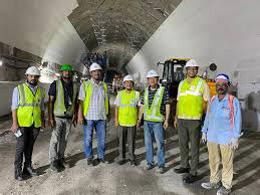
When 42 migrant workers landed in Vancouver to excavate twin tunnels for the Canada Line in April 2006, the former Spanish teacher turned labour activist was working as a researcher for the BC Building Trades Council.
But when union tradesmen on the Canada Line project heard about the tunnel workers’ alleged US$1,000 per month wages and low-quality living conditions, Barrett found himself pulled into the union drive of his career.
“This case was unbelievable,” he said. “There were a lot of firsts with this case — there are many, many fascinating labour stories to cover.”
According to the building trades council, which represents more than 50,000 unionized construction workers in the province, the 42 tunnel excavators became the first group of Temporary Foreign Workers to unionize in Canada.
The migrant workers’ union, now known as Laborers’ International Union of North America Local 1611, sparred with the employer in courts and tribunal for years, trying to get compensation for the low wages.
The local labour movement united behind them in an attempt to set legal precedents that would protect migrant and domestic workers’ rights across the country. According to Barrett, their struggle raised the bar for tunnel excavators across the world.
Barrett recounts the workers’ collective struggle, the employers’ backlash and the legal fallout in granular detail in his new book, A Fight For Justice.
Ahead of the book launch, Barrett and I met in a Vancouver café to discuss his historic fight — and its ripple effect on labour nearly two decades later.
The conversation has been edited for length and clarity.
The Tyee: You were with the BC Building Trades for 15 years. Of all of the organizing drives that you were involved in, why write about this one?
Joe Barrett: It’s the first ever certification of temporary foreign workers. That should have spoken volumes all by itself. We should never have had to go in. The fact that they were willing to risk everything by joining the union should have been enough evidence that they were only earning $1,000 per month.
If they had been earning minimum wage, they never would have joined the union in the first place. The only reason they did was because the wage was terrible. We always said in organizing that the best organizer is a bad employer, because you need conditions to be black and white for workers to really risk their jobs. That’s what this case was.
The other good thing about this story is it’s almost a textbook case for a young labour lawyer to learn the different tools and techniques that employers and their legal counsel will use to stymie a legitimate effort for workers to get their rights. Everything from the sticks and sweeteners to the stalling.
Throughout the course of the book, you detail the union drive, legal fight and logistical challenges that made up the fight to get these workers’ justice. I’m curious if you think you won that fight?
Yes. Obviously, because we got a big settlement for the workers that, all by itself, was a victory. I’ve tried to always go back to the workers and what motivated them. They made a huge sacrifice.
To be a migrant worker, you have to leave your family, and almost all of them were young fathers, some of them with babies on the way. The whole time they were here, that’s where their head was at: their family, their kids, and missing their kids.
More important for the union movement itself was that legal precedent. Things have gotten worse for most of the construction industry, but for tunnel excavation workers worldwide, this case changed everything.
At the end of the book, I talk about this conversation I had with Germán Caro, one of the workers who separated himself from the union effort. I was expecting him to say, “Joe, I never want to talk to you again.”
He went totally the other way. He said, “Joe, I only have one thing to say to you, and that is thank you.”
He told me that because he kept working for the company. Caro told me that after leaving Vancouver, he was working side by side with another tunnel worker who was previously on a completely different job, in a completely different country — I think it was the Dominican Republic.
And this other worker mentions how his wage on that Dominican Republic job doubled with no explanation. He’s telling this story to Caro while they’re both working together, and Caro says, “I know why your wage went up.”
That’s because after this fight, the companies didn’t want to go through it again. The precedent stands.
That precedent comes up quite a bit in your book. You write that one of the reasons that you were so intent on fighting for them was because you wanted to raise the bar for all temporary foreign workers who come to Canada for these construction projects —
I do want to touch on that — there was a conversation several of the tunnel workers had with me about the legal precedent.
They said, “we understand, Joe, why you guys are doing; You’ve told us it’s about the legal precedent.”
But then they would turn to me and say, “but Joe, why are YOU doing this for us? Because we know you are doing this on your hours off as a volunteer.”
I did have to think about that. I didn’t have to think too long and deep, because this has been a lifetime thing for me. I grew up in a very political family. [Editors’ note: Joe Barrett is the son of former BC NDP Premier Dave Barrett.]
So it was natural to see that this was an opportunity to do good. I felt a real moral indignation, and so I wanted to do what I could do to help. So I just wanted to touch on that, because my motivation has been questioned.
Outside of tunnel work, we have seen a lot of construction companies turn to temporary foreign workers. I’ve heard from labour sources today that conditions have gotten worse across the industry. How would you reflect on the greater fight for justice for all migrant workers in Canada?
It’s a very competitive industry, construction. There are all kinds of things happening: an underground economy, subcontracting, subcontracting of subcontracting.
So even the good employers, the ones that want to do a good job — which is most — have to throw in the towel and join with the scallywags sometimes just to compete. Throw temporary foreign workers into an already highly ruthless industry, and it just makes it that much worse.
It’s not unusual for somebody in a trade to have 100 different employers over the course of their lifetime, because they’re hired and laid off because they work themselves out of a job. It’s all short term work. The industry itself is already set up for abuse, unless you’ve got good employment standards and safeguards and compliance measures to make sure that those standards are being maintained.
Leave a comment